My Perspective Language Arts Story Two Kinds List Daughters Character Traits
Pixar brusk films fabricated their debut in the early on 1980'south every bit Disney made the transition into computer animation engineering. Actualization as introductions to feature length films, Disney Pixar shorts have become some of the about highly anticipated aspects of feature film releases. These brusque films are fantabulous tools to use in secondary English language Language Arts in grades 6-12 considering of their concise platform for targeting literary (in form of a visual text) analysis through literary devices. In this list, I have compiled some of my favorite Pixar animated short films that I use in my secondary classes alongside pieces of classic literature to spark thematic discussions likewise as teach specific belittling skills.
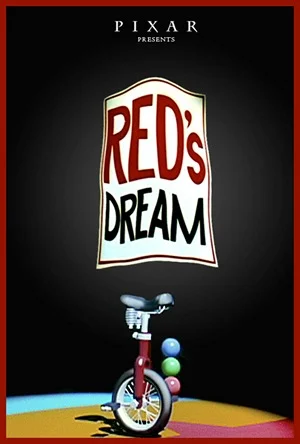
This brusk moving-picture show depicts the story of a unicycle that is tucked away in the back of a bike shop in the auction corner, marked 50% off. The crimson unicycle has a dream that he does a circus show with a juggling clown, and the unicycle eventually takes over the show and performs the juggling act, finishing with a large applause. The unicycle is proud of himself, merely and so comes back to the reality of the cycle shop and goes back to his sale corner once more.
ELA Application
Red's Dream is a fascinating report of point of view. The story is told from the bespeak of view of a unicycle that dreams of being the star of the show rather than just a prop for a show. Students tin use this short film every bit a springboard for discussing how point of view affects a story.
Consider the following questions:
-
Who is telling the story?
-
How does the narrator's signal of view affect the events of the story?
-
How does the narrator feel about…?
-
What does the narrator feel is most of import?
-
How would a unlike point of view affect the story? In the case of Ruddy's Dream, how would the story be unlike if told from the perspective of a bike or the clown?
-
Based on the narrator's perspective on life, what is the overall theme of the story?
Consider pairing Scarlet'south Dream with pieces of literature that contain unique points of view such as The Curious Incident of the Canis familiaris in the Night-time by Mark Haddon, The Book Thief by Markus Zusak, The Metamorphosis by Franz Kafka, Wicked by Gregory Maguire, "Contents of the Dead Man'southward Pocket" past Jack Finney, "The Secret Life of Walter Mitty" by James Thurber, "The Red Ibis" past James Hurst, "The Cask of Amontillado" by Edgar Allan Poe, "The Celebrated Jumping Frog of Calaveras Canton" by Mark Twain, and others.
Summary
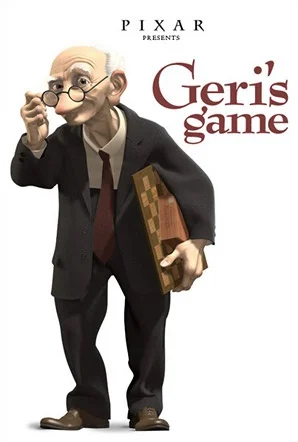
This brusk film from Pixar depicts a chess lucifer with a twist betwixt an onetime man, simply his opponent is himself. The old man switches seats and sides of the table to play both turns, taking a pair of glasses on and off as he "changes characters." One of the players is conspicuously better than the other, and fifty-fifty though the old man is playing against himself, he reacts to each play with shock, terror, excitement, or joy—depending upon the play. The game ends with a plot twist when the losing homo plays a trick against the winning human past switching the board effectually, and the terminal laugh of the short film occurs when one man has to mitt over a pair of dentures to the other quondam human as the winning prize.
ELA Application
Geri's Game is an excellent film to discuss characterization with your students. Students tin can talk over the mental state of the old man—Is he senile? Is he crazy? Is he board with life? Is he a artistic thinker?
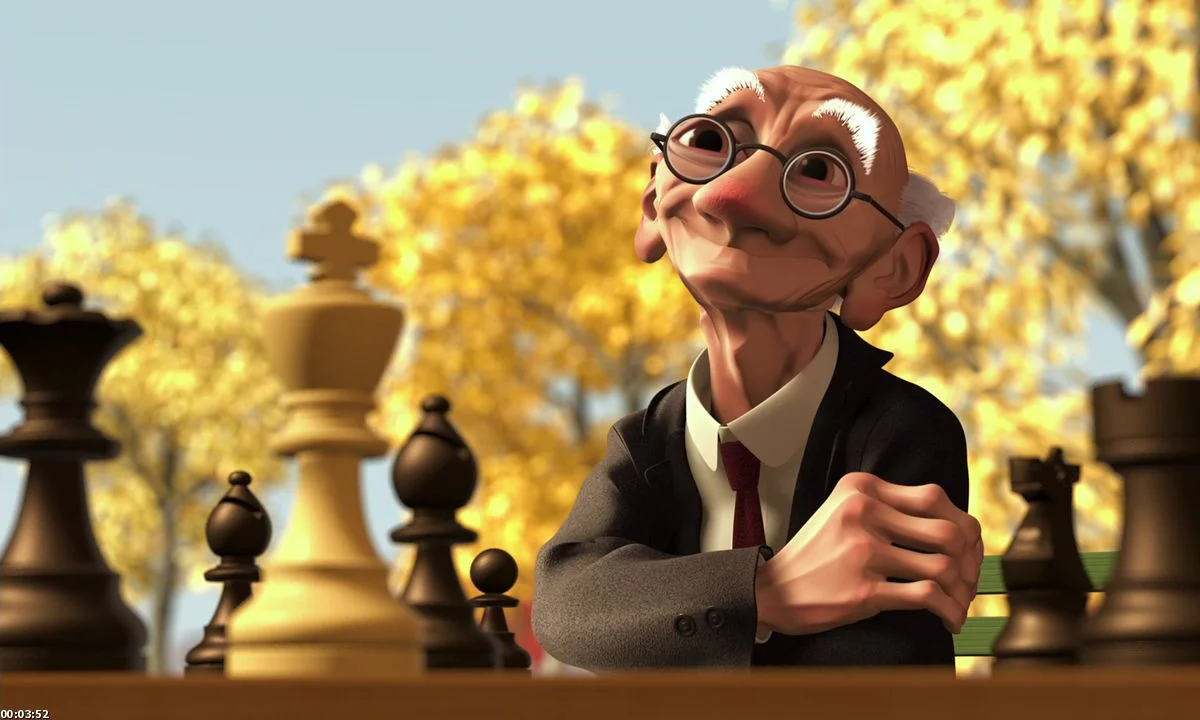
It'southward besides an excellent picture to discuss the concept of the plot twist. At that place are three major plot twists of this short film that bring about the humorous aspects of the story. The first plot twist occurs when it'southward revealed that the old man is playing against himself. That brings well-nigh the first audience chuckle. The 2d plot twist occurs when the old man plays the play a joke on against his "opponent" and switches the board around. The third plot twist happens when the dentures are handed over as the "grand prize" for winning the game. It's as though these dentures have been a longstanding bet between the two "men," and it'south implied through the old man's mannerisms and gestures that he'southward ever wanted to win merely has always lost against his "rival" chess "opponent."
This brings almost another interesting betoken of discussion: subtext through activity. There isn't a single line of dialogue spoken in this short picture (except for a few grunts, gasps, and laughs). Just a relationship develops between the two sides of the old human being based upon facial expressions, mannerisms, gestures, and the dynamic of their interaction. Much can exist assessed and implied about this man's character based upon these deportment alone.
Every bit a final bespeak of discussion, students can talk almost the overall thematic pregnant of the moving-picture show—Is this a film well-nigh the dual nature of man? Is this a flick about the senility of old age? Is this a motion-picture show about boredom in old historic period? Is this a film about the id and the ego? Students can debate the meaning of the moving-picture show and substantiate their interpretations with evidence.
Summary
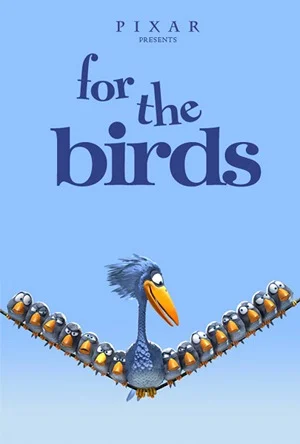
For the Birds depicts the story of a flock of birds that are sitting on a power line. A much larger bird appears, just the other birds practice non like him. He joins them on the power line, weighing it down and causing it to bend. The large bird falls but catches himself by the claws while the other birds peck at his claws, which causes the large bird to autumn downward. This action causes the power line to shoot dorsum upward similar a slingshot, throwing all of the birds into the air. Feathers fill the air, and as the birds drib dorsum to the footing one-by-one, we begin to come across that each bird has lost its feathers due to the force of being flung into the air by the power line. The large bird that they initially rejected gets the terminal and final laugh.
ELA Application
For the Birds is an excellent picture for teaching situational and dramatic irony. As the birds peck abroad at the big bird's claws, we in the audience know that he will before long fall down, causing the electric line to rebound upwards, shooting the other birds into the air. It is also situational irony in that the flock of birds rejects the large bird, but the large bird is the one who ends up mocking them with a deep abdomen laugh at the end.
Questions to consider for analyzing irony in For the Birds:
-
What is ironic well-nigh the story?
-
How does irony relate to the theme of the story?
-
How does irony create sense of humour in the story—particularly in For the Birds?
-
How does dramatic irony create suspense?

Consider pairing For the Birds with pieces of literature that contain irony such as "The Ransom of Ruby Chief" and "The Gift of the Magi" by O'Henry, Shakespearean dramas such as Macbeth and Romeo and Juliet, "The Necklace" by Guy de Maupassant, "Story of an Hour" by Kate Chopin, "The Machine that Won the War," by Isaac Asimov, "Trifles" by Susan Glaspell, "The Interlopers" by Saki, "The Blueish Hotel" by Stephen Crane, "The Bet" past Anton Chekhov, "The Tell-Tale Heart," "Richard Cory" past Edwin Arlington Robinson, and others.
Summary
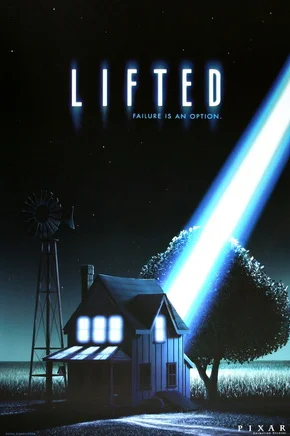
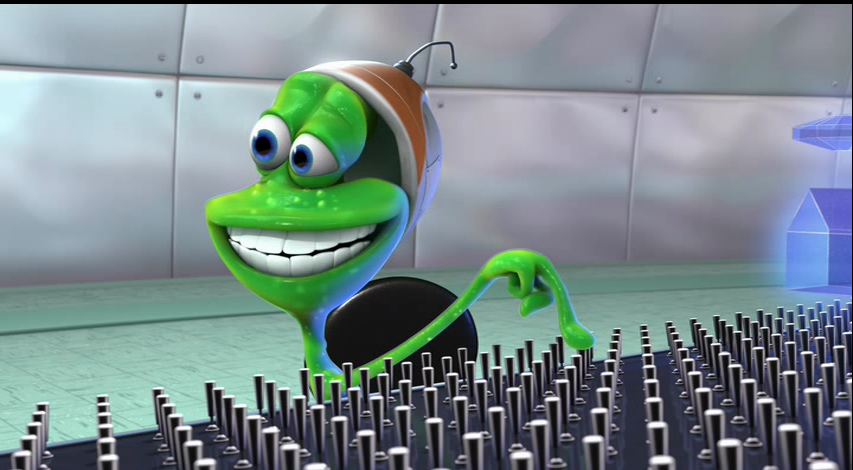
Lifted depicts a hilarious alien abduction gone awry in which a student alien attempts to navigate the controls of a spaceship in order to housebreak a homo. Nether the tutelage of a mentor alien who seems to exist grading his pupil, the educatee alien fails to operate the controls successfully, so the mentor alien takes over, delivering a man safely back to his farmhouse. The student alien and so begins to cry because he failed at the controls, so the mentor, feeling bad, gives the controls back to his student, who so crashes the spaceship on top of the farmhouse where they've been practicing abduction skills. As the spaceship flies away, the only thing left standing is the bed with the sleeping man, surrounded past a large crater made past the spaceship every bit information technology hit the ground. The sidebar humour of the moving-picture show is that the man in the farmhouse they are practicing to housebreak never wakes up even though he gets repeatedly slammed into the walls and dropped on the ground. This is my FAVORITE Pixar curt film, and students will love information technology!
ELA Awarding
Lifted is an excellent film for didactics the elements of humour every bit created through irony, merely it is as well a great film to detect the dynamics of the archetypal mentor/ pupil human relationship in which a mentor teaches a pupil the skills needed to accomplish his/her heroic job. This relationship can be quite complex and full of tension and resentment (peculiarly if the mentor effigy is too a parental figure). But information technology is a necessary relationship that enables the hero to fully realize his/her potential.
This archetypal relationship is popular amidst famous, well-known stories including Yoda/ Luke Skywalker (Star Wars), King Arthur/ Merlin (The Sword in the Stone & The Once and Future Rex past T.H. White), and Daniel/ Mr. Miagi (The Karate Child).
Questions to guide discussion nearly the mentor/ pupil archetypal human relationship in Lifted:
-
Characterize the mentor. What are the graphic symbol traits of the mentor?
-
Characterize the pupil. What are the grapheme traits of the pupil?
-
What is the nature of the mentor/pupil relationship? Is information technology tense? Friendly? Formal? Casual? Piece of cake? Fierce? Strained? etc.
-
How does the mentor influence the pupil'due south actions? How does the pupil influence the mentor's actions?
-
How does the mentor/ pupil human relationship inform the theme of the story?

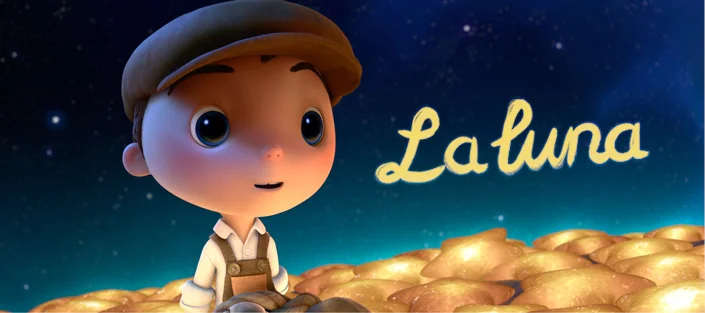
This curt moving picture depicts iii generations of a family—a boy, his father, and his grandfather. It begins with the three men rowing in a boat at night to go to work. They stop to anchor the boat and give the immature male child a hat similar the aforementioned ane they are wearing, just the father and grandfather fight over how the hat should be worn. The male child mimics the aforementioned actions as the men, trying to be just similar them. All of a sudden, the moon appears, and they raise a ladder, climbing and then floating to the surface of the moon. One time they arrive on the surface of the moon, they see that the moon is covered with stars. The boy'southward wonder and awe reveals that information technology is his starting time visit to the moon with his father and gramps-- it is his first day taking on the task of his family's business. They begin to sweep the stars, merely the father and grandfather disagree on how the stars should be swept. They contend in front of the boy only stop when a large star crashes to the moon'south surface. They work together to dislodge the behemothic star, and while the father and grandfather continue to argue nearly how it should be done, the boy figures out what to do his own way. He climbs the giant star, taps it with a hammer, and it breaks into a huge bundle of tiny stars. They sweep the stars up and climb dorsum down to the rowboat once again in the light of the moon.
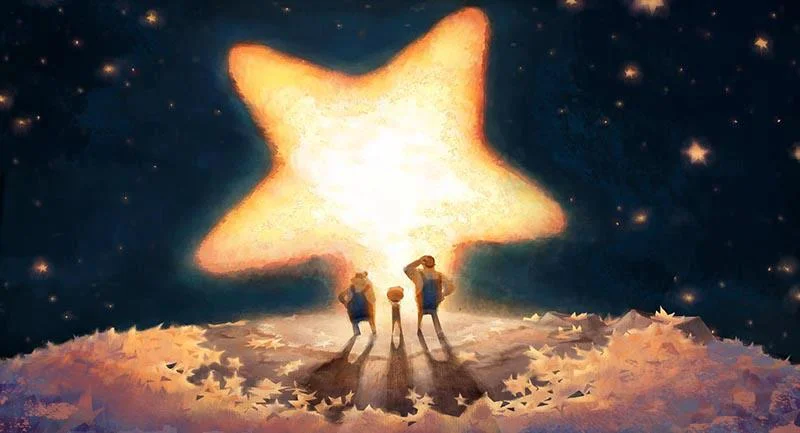
ELA Awarding
La Luna is a coming of age story, and students can compare/contrast this coming of historic period story (bildungsroman) to other such stories in this genre like The Adventures of Huckleberry Finn, Great Expectations, To Kill a Mockingbird, The Outsiders, A Separate Peace, A Prayer for Owen Meany, Harry Potter, The Catcher in the Rye, Siddhartha, and others.
This is likewise an excellent moving picture to discuss symbolism through the symbol of the stars. It is quite purposeful that the moving picture creators chose for the three generations of these men to sweep up stars and not simply trash. Consider the following questions:
-
What do these stars represent?
-
What does the 1 large star represent?
-
How does the symbol of the stars reveal the characterization of the iii different generations of men?
-
How do the film creators use symbolism to create an overall message?
-
What does the moon (la luna) symbolize in the film?
This is one of my very favorite Pixar curt films, and it actually resonates with secondary students who can find themselves caught betwixt the pressures to do things the way older familial generations exercise things and the way they desire to exercise things-- that might even prove better. This is the quintessential struggle of growing upward and coming into ane's own—the quintessential coming of age story. Inquire students to reflect back on their ain lives to contemplate if they've always felt conflicted about meeting family expectations versus following their own paths. Many students will have a lot to share on this topic!
Which Pixar short films are your favorite? Which ones resonate with your students? Join the conversation in the comments below.
About the Author

Meredith is the founder and creator of TeachWriting.org and Bespoke ELA. She has taught high schoolhouse English for ten+ years in Dallas, Chicago, and New York Metropolis and holds a M.A. in Literature from Northwestern University. She has always had a connection to the written give-and-take-- through songwriting, screenplay writing, and essay writing-- and she enjoys the process of teaching students how to express their ideas. Meredith enjoys life with her hubby, girl, and sweet pups.
Related Resource

Source: https://www.bespokeclassroom.com/blog/2017/4/23/5-pixar-short-films-to-use-in-secondary-ela
0 Response to "My Perspective Language Arts Story Two Kinds List Daughters Character Traits"
Post a Comment